Human Body
Digital Handwritten Lesson
Unit 1: Human Body | Grade 8 HP&CA | New Millennium Academy
Unit 1: Human Body
🧠 1.1 Nervous System ⚗️ 1.2 Endocrine System 🔬 1.3 Reproductive System 📝 Exercise
Nervous System
What is the Nervous System?
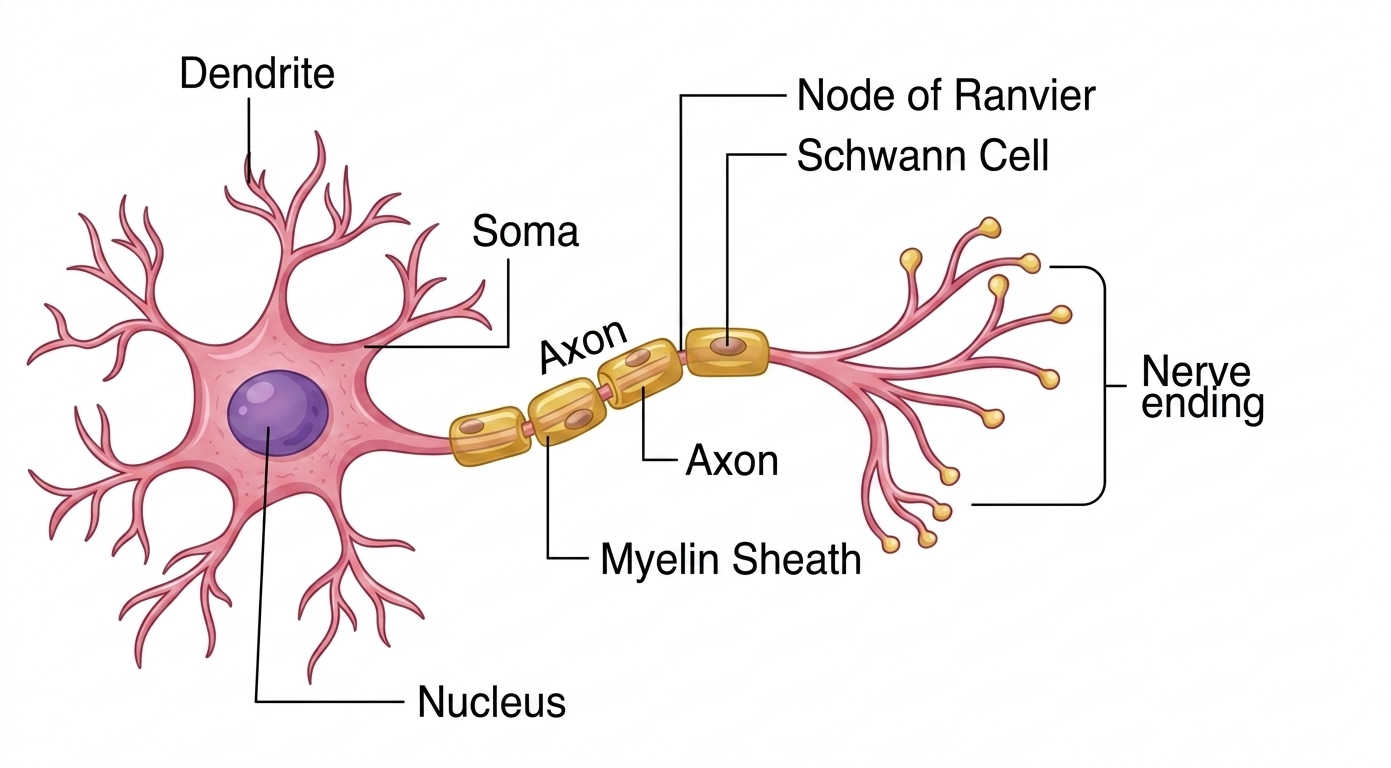
The nervous system is made up of tiny nerve cells called neurons. Each neuron has three parts: an axon (a long tail-like fibre), dendrites (short branching roots), and a nucleus in the centre surrounded by protoplasm.
It controls and coordinates all internal and external activities of the human body and gives commands to all other organ systems. That is why it is called the "Master System" or "Command Centre".
It has three main parts: the Central Nervous System (CNS), the Peripheral Nervous System (PNS), and the Automatic Nervous System (ANS).
A. Central Nervous System (CNS)
The CNS has two parts: the brain and the spinal cord. The brain controls thinking, learning, moving, and feeling. The spinal cord carries messages between the brain and the rest of the body. It is called the "centre" because it collects information from the whole body and coordinates everything.
a. The Brain
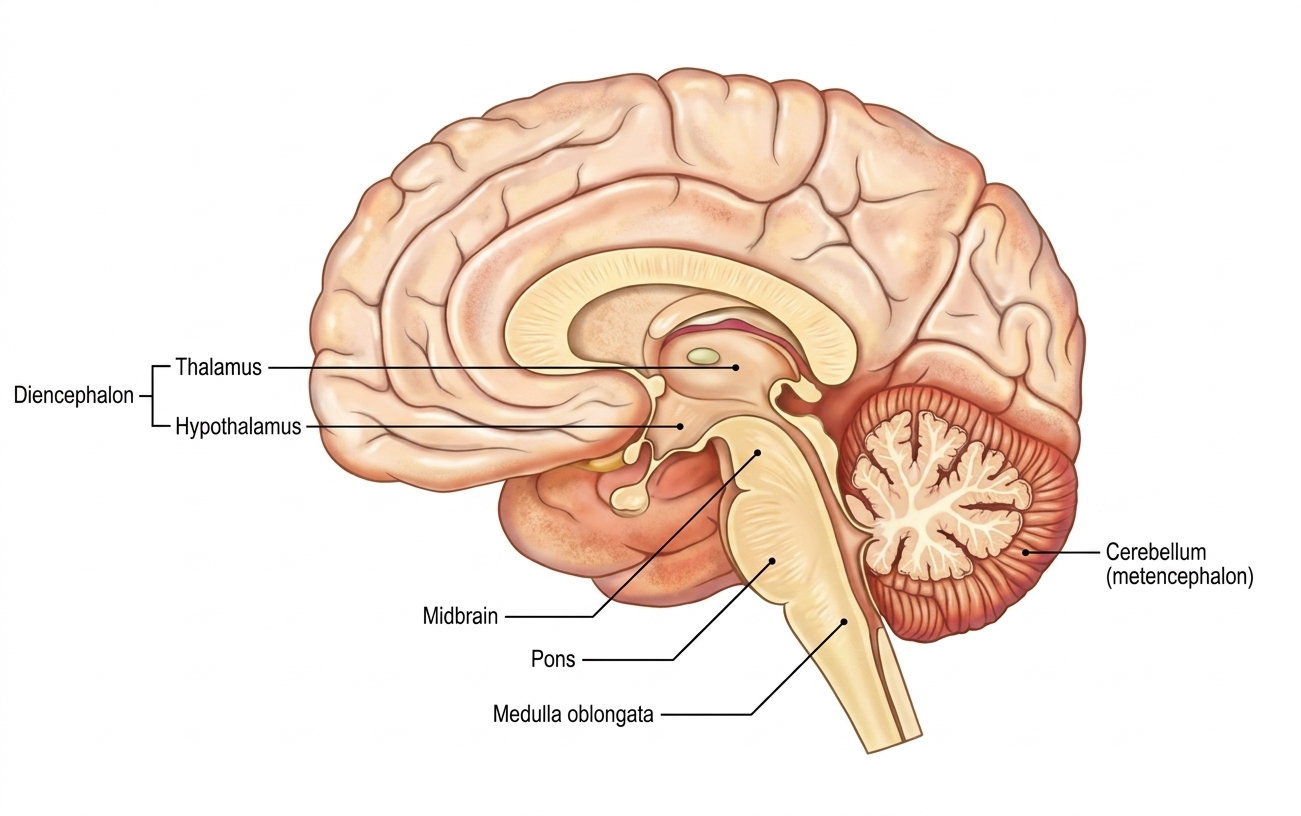
The brain sits safely inside the skull. An adult brain weighs about 1.5 kg and is made of soft tissue. It is protected by a thin covering called the meninges. It has five main parts:
- Thinking, remembering, and making decisions
- Controls all five senses (sight, sound, smell, taste, touch)
- Commands and coordinates all other organs
- Controls and coordinates muscle movements (walking, running)
- Maintains balance and posture
- Sends received signals to the cerebrum
- Acts as a bridge — passes information from the spinal cord up to the cerebrum and commands from cerebrum down to spinal cord
- Another connecting bridge — information and commands from cerebrum travel through it to the medulla oblongata
- Controls heartbeat and breathing
- Manages reflex actions (pulling hand from heat, blinking)
b. Spinal Cord
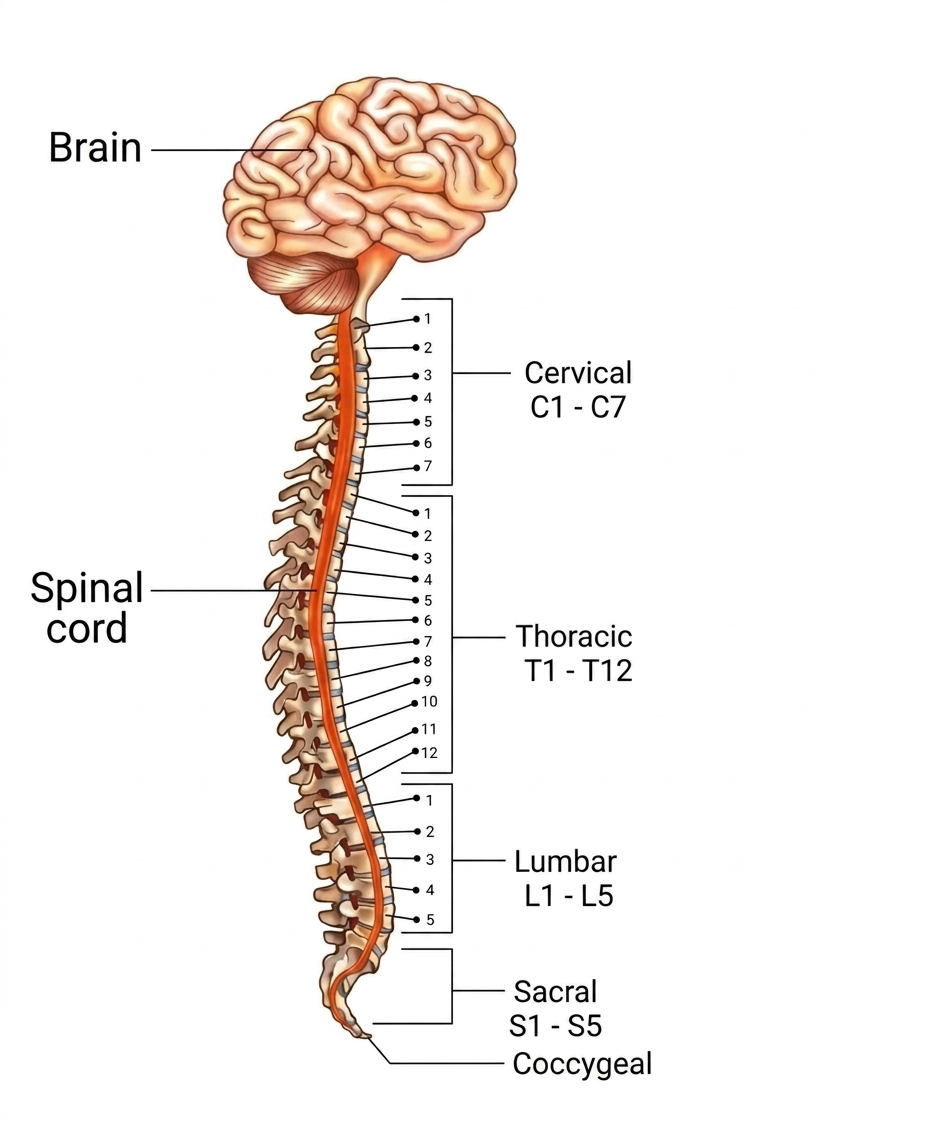
The spinal cord starts at the bottom of the brain and runs down the back. It is protected by the vertebrae (backbone). It carries nerve signals back and forth between the brain and the body, and also controls reflex actions.
B. Peripheral Nervous System (PNS)
The PNS is a large network of nerves that connects the CNS to all parts of the body. It is made up of 12 pairs of cranial nerves (from the brain) and 31 pairs of spinal nerves (from the spinal cord). Think of it as the body's wiring system.
C. Automatic Nervous System (ANS)
Some activities happen automatically — like heartbeat, breathing, and digestion. We do not have to think about them. The ANS controls these activities. It is divided into two opposite systems:
⚡ Sympathetic System
- Speeds up breathing rate
- Increases heartbeat
- Widens the pupils
- Slows down digestion
🌿 Parasympathetic System
- Lowers heartbeat
- Increases rate of digestion
- Narrows the pupils
- Helps the body rest and relax
Functions of the Nervous System
- 1Receives information — picks up signals from inside and outside the body.
- 2Sends messages — sends information to the brain and spinal cord.
- 3Gives commands — tells organs and glands how to react.
- 4Takes action — turns information into body actions.
- 5Enables thinking — allows us to think, remember, and analyze situations.
- 6Coordinates everything — keeps all body activities balanced and working together.
- The neuron is the basic unit of the nervous system (axon + dendrites + nucleus).
- CNS = Brain + Spinal Cord. PNS = network of cranial and spinal nerves.
- Cerebrum → thinking, senses, memory. Cerebellum → balance, muscle coordination.
- Medulla oblongata → heartbeat, breathing, reflex actions.
- Spinal cord = 45 cm long, 31 pairs of spinal nerves.
- The nervous system is called the "Master System" because it controls everything.
Endocrine System
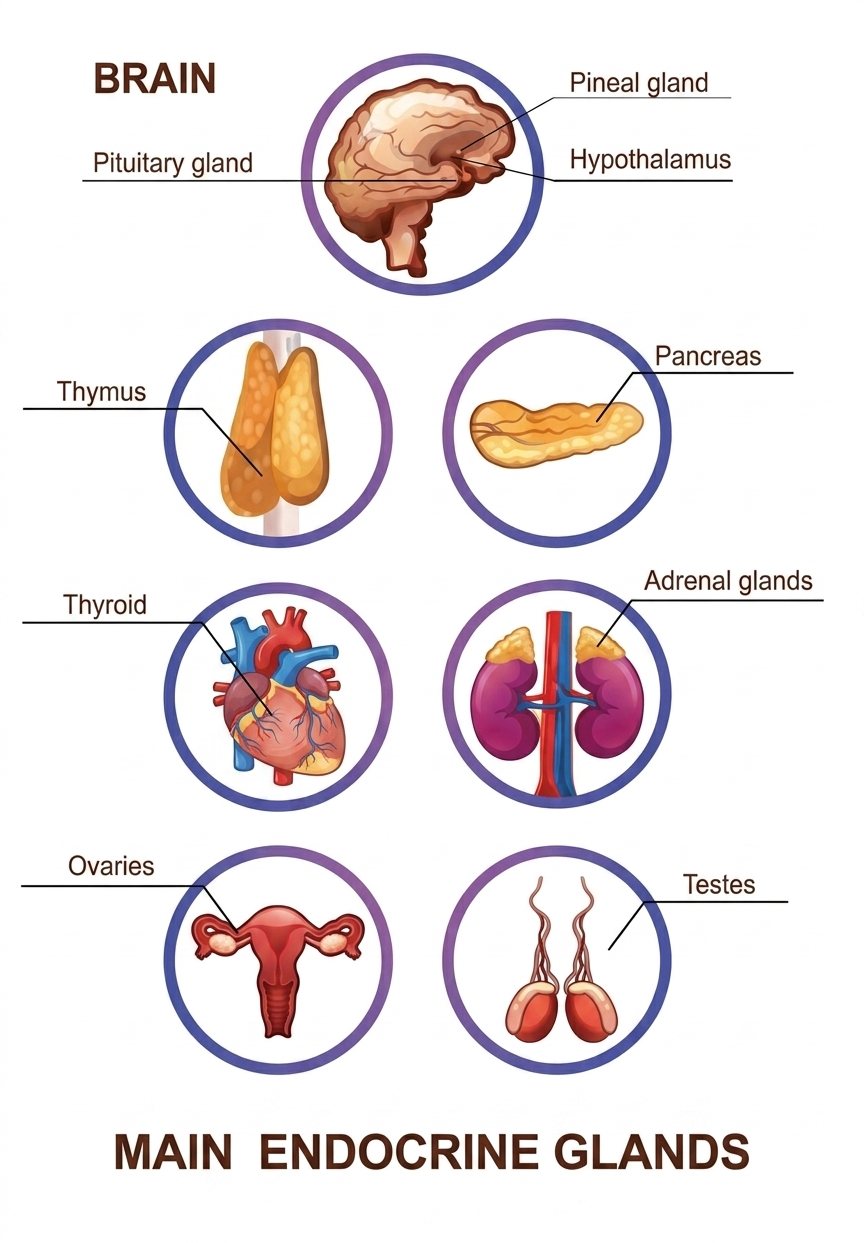
The endocrine system is also called the gland system. Different glands in the body produce hormones and enzymes which travel through the body via ducts and blood to control different body functions.
There are two types of glands: Exocrine glands (with ducts) and Endocrine glands (without ducts).
A. Exocrine Glands
Exocrine glands produce substances like sweat, tears, saliva, and digestive juices. These substances travel to other organs through ducts (tubes).
Examples: Sweat glands, lacrimal glands (tears), salivary glands, mammary glands (milk), liver (bile).
Functions: Absorb nutrients, control body temperature, and protect the inner lining of the body.
B. Endocrine Glands (Ductless)
Endocrine glands have no ducts. They release hormones directly into the blood, which then carries them to tissues and organs all over the body.
- Commands and controls all other endocrine glands
- Controls growth, blood pressure, water retention
- Stimulates adrenal glands and sex hormones
- Activates mammary glands during pregnancy
- Produces melatonin which manages our sleep–wake cycle
- Regulates breathing, heartbeat, digestion rate, body temperature
- Controls growth of bones and muscles
- Helps with mental development
- Controls calcium levels in the blood
- Manages balance of phosphorus and calcium
- Important for growth and development of bones
- Outer cortex produces corticosteroids
- Inner medulla produces adrenaline
- Affects digestion, heart rate, oxygen in blood
- Produces white blood cells (lymphocytes)
- Develops antibodies to help the immune system fight diseases
- Testes: produce testosterone — sperm & male characteristics
- Ovaries: produce estrogen (eggs, female characteristics) and progesterone (prepares uterus for fertilized egg)
- Exocrine: releases digestive juice
- Endocrine: produces insulin and glucagon to control blood sugar level
Functions of the Endocrine System
- 1Helps in circulation, respiration, and digestion.
- 2Helps to control body temperature.
- 3Helps the body absorb essential nutrients.
- 4Plays a vital role in the growth and development of bones.
- 5Develops the immune system by producing antibodies to fight diseases.
- 6Helps the reproductive process by producing sex hormones.
- Exocrine glands use ducts. Endocrine glands release hormones directly into the blood.
- Pituitary gland = master gland (controls all other endocrine glands).
- Pineal gland → melatonin → controls sleep cycle.
- Thyroid gland → thyroxine → controls breathing, heartbeat, growth.
- Adrenal gland → sits on kidneys → produces adrenaline.
- Pancreas = mixed gland → insulin + glucagon → controls blood sugar.
- Thymus gland → produces white blood cells → fights infections.
Reproductive System
In humans, fertilization occurs when a sperm (from the male) meets an ovum/egg (from the female). They unite to form a fertilized egg (fetus), which is implanted in the uterus and grows into a child.
A. Female Reproductive System
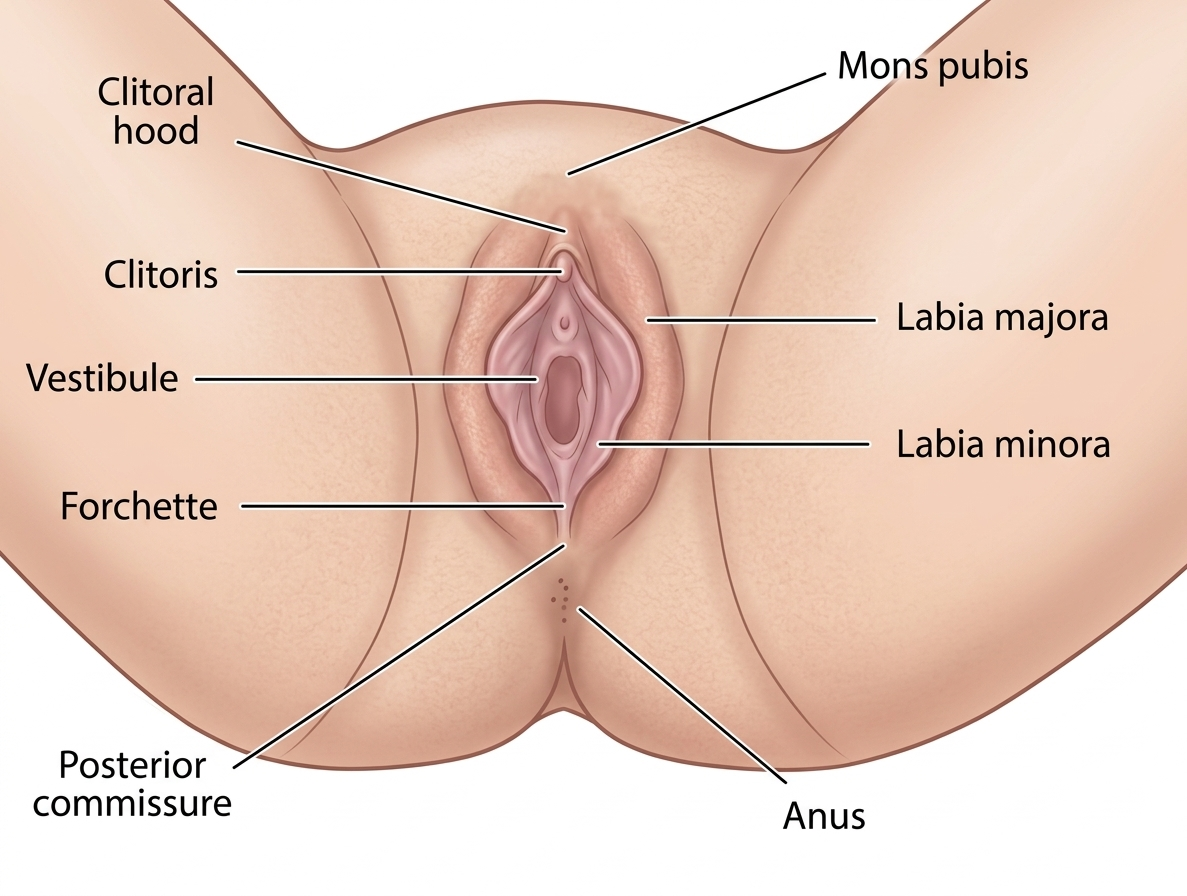
The female reproductive system produces essential sex hormones and ova (eggs). It provides a safe environment for the growth and development of the fetus. It has external and internal parts.
External Female Organs (Vulva)
The group of external reproductive organs is collectively called the vulva. It includes: Labia majora (outer skin folds), Labia minora (inner delicate folds), Clitoris (erectile tissue, very sensitive), Hymen (thin tissue covering vaginal opening), and Vestibule (area between labia minora).
Internal Female Organs
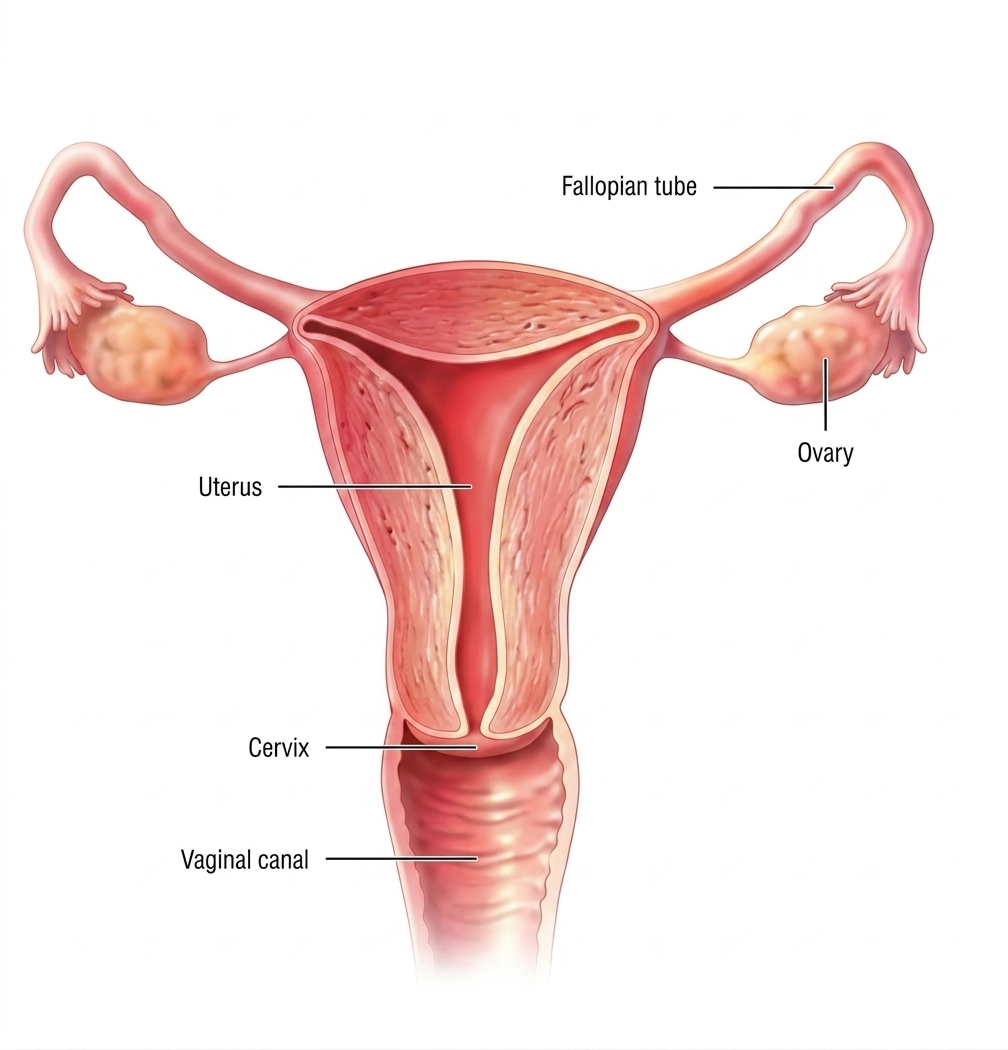
- Passageway for blood during menstruation
- Passageway for the child during delivery
- Connects internal and external reproductive organs
- Nourishes and houses the fetus until delivery
- Pathway for ovum from ovary to uterus
- Fertilization normally occurs here
- Fertilized egg travels through it to the uterus
- Produces eggs (ova) and hormones (estrogen & progesterone)
- Ovulation: releases one egg each month
B. Male Reproductive System
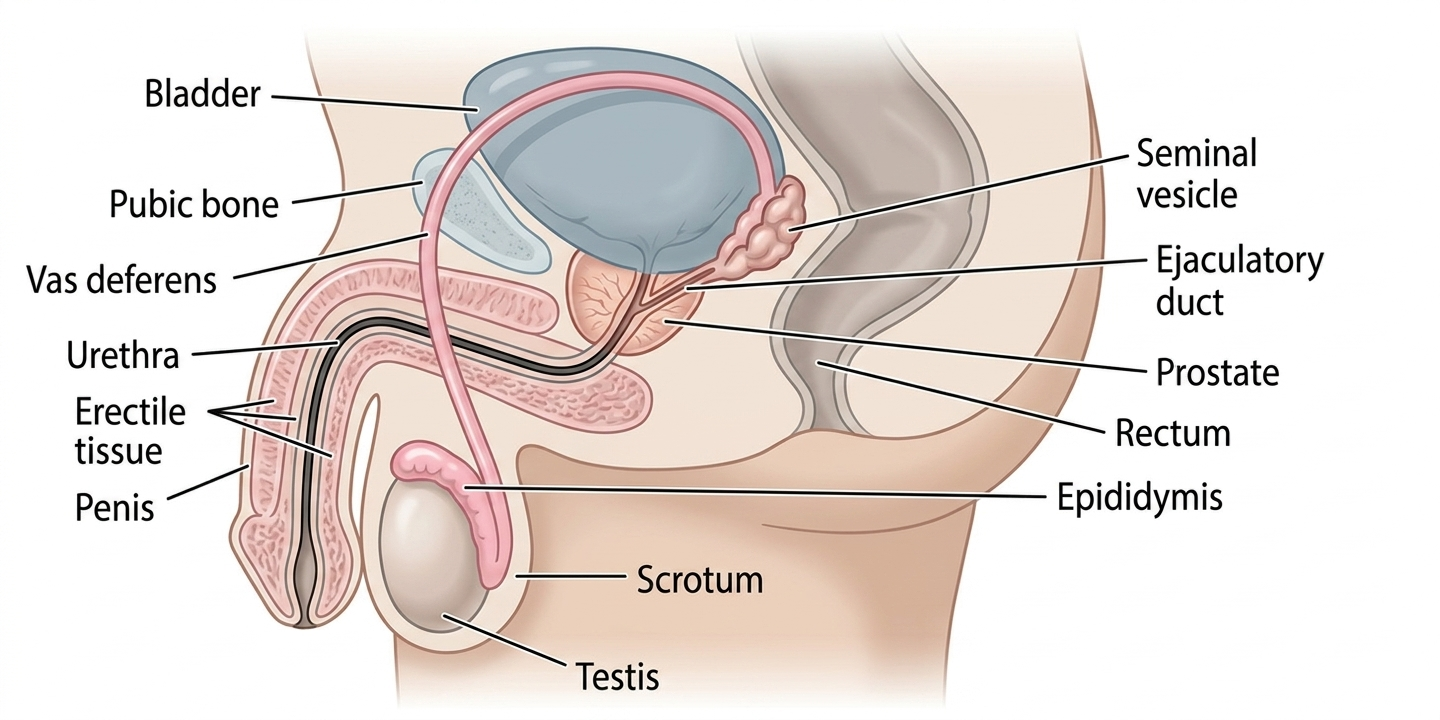
The male reproductive system produces sex hormones and sperm. It also produces protective fluid that helps transport the sperm.
- Produce sperm and the hormone testosterone
- Stores and carries sperm from the testes
- Helps sperm mature before passing to vas deferens
- Transports mature sperm to the urethra for ejaculation
- Produces semen
- Provides nutrition to the sperm
- Delivers semen and sperm into the urethra
- Secretes fluid that protects the sperm
- Provides mobility to the sperm
- Expels both urine and sperm out of the body
- Takes part in sexual intercourse and delivers semen into the vagina
- Allows excretion of urine
- Fertilization = when sperm meets ovum, usually in the fallopian tubes.
- Female external organs together are called the vulva.
- The uterus (womb) houses and nourishes the fetus during pregnancy.
- Ovulation = releasing one egg from the ovary each month.
- Testes produce sperm and testosterone. Ovaries produce eggs, estrogen, and progesterone.
- The fallopian tube is where fertilization normally takes place.
📝 Exercise
Answer all questions. Refer to your class notes for help.
Match the organs with their functions
| Organ | Function |
|---|---|
| a. Cerebrum | iii. Reasoning |
| b. Medulla oblongata | i. Reflex action |
| c. Pineal gland | iv. Melatonin production |
| d. Pancreas | v. Insulin production |
| e. Testes | ii. Sperm and testosterone production |
Tick the correct answer
| Question | Correct Answer |
|---|---|
| a. Which organ coordinates the speed of muscles? | ii. Cerebellum |
| b. How many pairs of spinal nerves exit from the spinal cord? | iii. 31 |
| c. Which gland is known as the master gland? | i. Pituitary gland |
| d. Which gland secretes the insulin hormone? | i. Pancreas |
| e. Which of the following is a female reproductive organ? | iv. Uterus |
Answer these questions
a. What is the nervous system? Write down any two functions of it.
- To control and coordinate the activities of all body parts.
- To help the body perceive and respond to external stimuli (like heat, sound, or light).
b. Why is the brain known as the centre of the nervous system?
c. What do you understand by the endocrine system? Write a short description of any three glands.
- Pituitary Gland: Located at the base of the brain; regulates growth and controls other endocrine glands.
- Thyroid Gland: Located in the neck; produces thyroxine which controls the rate of metabolism.
- Adrenal Gland: Located above the kidneys; produces adrenaline to prepare the body for "fight or flight" during stress.
d. Pancreas is known as a mixed gland. Why? Justify it.
e. Draw a picture of the internal female reproductive organs and name them.
f. Describe the male reproductive organs in brief.
g. Write any two differences between the testes and the ovary.
| Testes | Ovary |
|---|---|
| Found in the male body. | Found in the female body. |
| Produces sperm and testosterone. | Produces eggs (ova) and estrogen. |
Course material curated by Mr. Nripendraswar Acharya