Community Health
Digital Handwritten Lesson
Chapter 2: Community Health & Mental Health
Community Health
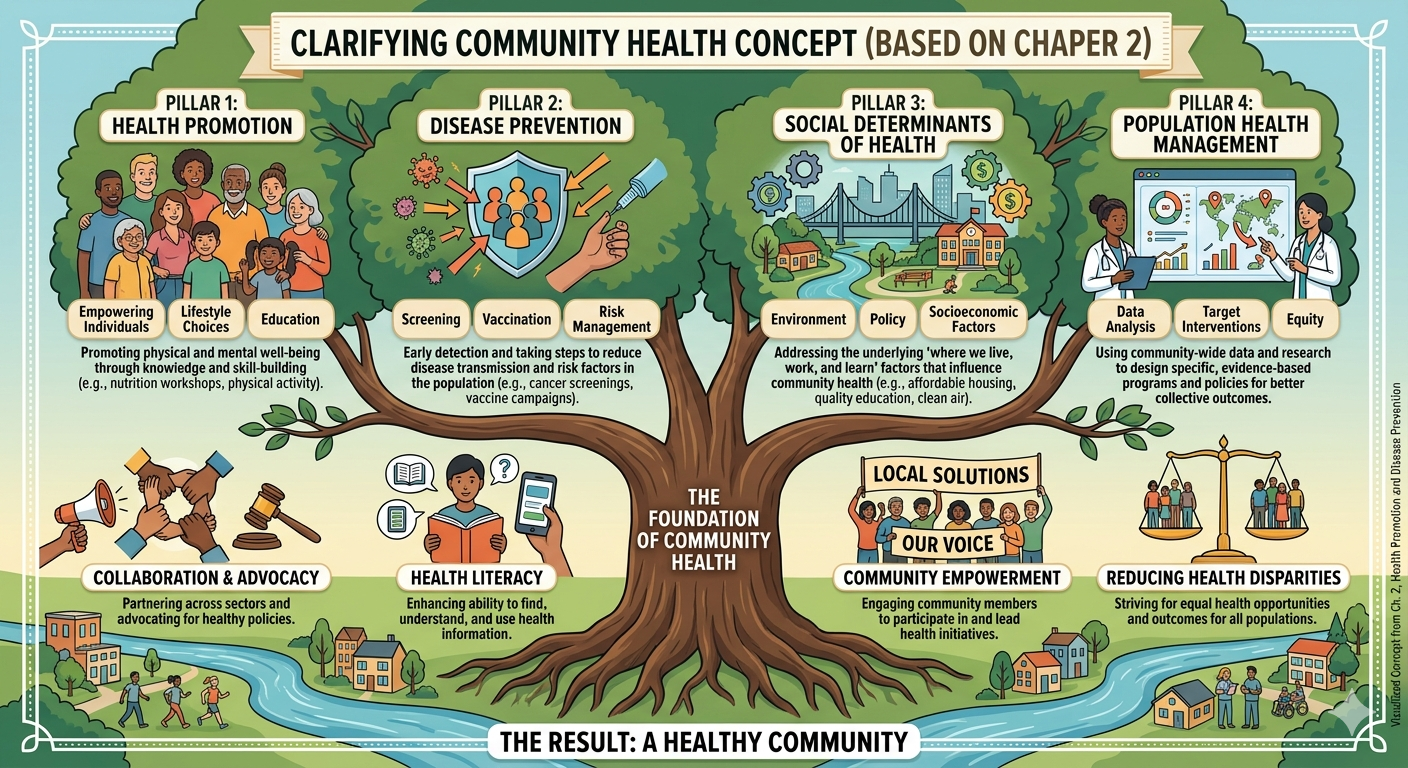
Community health is about improving and maintaining the health of the entire community where we live. A healthy community is made up of healthy individuals who can work together for the common good.
- Nutrition: Ensuring people have access to healthy food
- Cleanliness: Maintaining personal and environmental hygiene
- Health Services: Access to medical care and health facilities
- Mental Health: Emotional and psychological well-being
- Disease Prevention: Stopping the spread of diseases
- Health Awareness: Educating people about healthy practices
- Rehabilitation: Helping people recover from health problems
- People become more productive and active
- Children grow healthy and strong
- Fewer people suffer from diseases
- The community becomes stronger and more united
- Healthcare costs decrease
Community Health Problems
Different communities face different health problems. Some common health problems that communities may experience include:
- Epidemics: Diseases like diarrhea, dysentery, and cholera spread due to lack of clean drinking water and poor sanitation
- Environmental Pollution: People suffer from asthma, high blood pressure, and cancer due to air, water, and soil pollution
- Malnutrition: Lack of nutritious food and poor eating habits cause malnutrition, especially in children
- Reproductive Health Issues: Early marriage and lack of proper care affect mother and infant health
- Infectious Diseases: HIV/AIDS and other sexually transmitted diseases are increasing
- Social Problems: Alcohol and drug abuse, smoking, and unemployment create health problems
- Poor Sanitation: Lack of proper toilets and sewage management
- Lack of Health Services: Limited access to hospitals and clinics
- Natural Disasters: Earthquakes, floods, and other disasters cause health emergencies
- Poverty and Hunger: Poor families cannot afford healthy food
- Low Health Awareness: People don't know about healthy practices
Solutions for Community Health Problems
Many programs are being implemented in Nepal to promote community health. Here are the major measures to solve community health problems:
- Awareness Programs: Conduct programs about personal and environmental health
- Waste Management: Make compost from biodegradable waste and reduce, reuse, and recycle non-biodegradable waste
- Nutrition Programs: Launch programs about nutrition awareness and locally available nutritious foods
- Safe Motherhood Programs: Reduce maternal and infant death through proper care
- Vaccination Programs: Immunize children to reduce child mortality
- Disease Control: Control the spread of infectious diseases quickly
- Safe Drinking Water: Ensure clean water, public toilets, and proper drainage
- Quality Health Services: Provide health services that are friendly to all groups (women, children, elderly, disabled)
- Health Insurance: Promote and expand health insurance programs
- Community Participation: Involve the community in solving health problems
Total Sanitation
Total sanitation requires the combined effort of individuals, families, and the entire community working together.
- Regularly brush teeth and keep the body clean
- Cut nails and hair regularly
- Keep clothes, rooms, and utensils clean
- Wash hands with soap before cooking, eating, feeding children, and after using toilet
- Women should keep pads and vagina clean during menstruation
- Dispose of used pads properly
- Clean rooms, floors, walls, windows, doors, and yard regularly
- Maintain and repair taps and toilets
- Separate kitchen waste into biodegradable and non-biodegradable
- Make compost from biodegradable waste
- Keep backyard farms and rooftop gardens neat and clean
- Manage gardening waste properly
- Provide safe drinking water to all people
- Monitor, clean, and maintain water sources regularly
- Keep all institutions clean and tidy
- Clean and maintain public places (streets, parks, temples, religious sites)
- Provide safe water and public toilets with proper drainage
- Install child-friendly, gender-friendly, and disabled-friendly toilets in schools
- Make menstruation pads available in schools and offices
- Dispose of pads in proper places
- Manage waste and drainage properly
- Dispose of hospital waste safely to protect health
Types of Toilet
Proper management of human waste is very important for good health. There are two main types of toilets used:
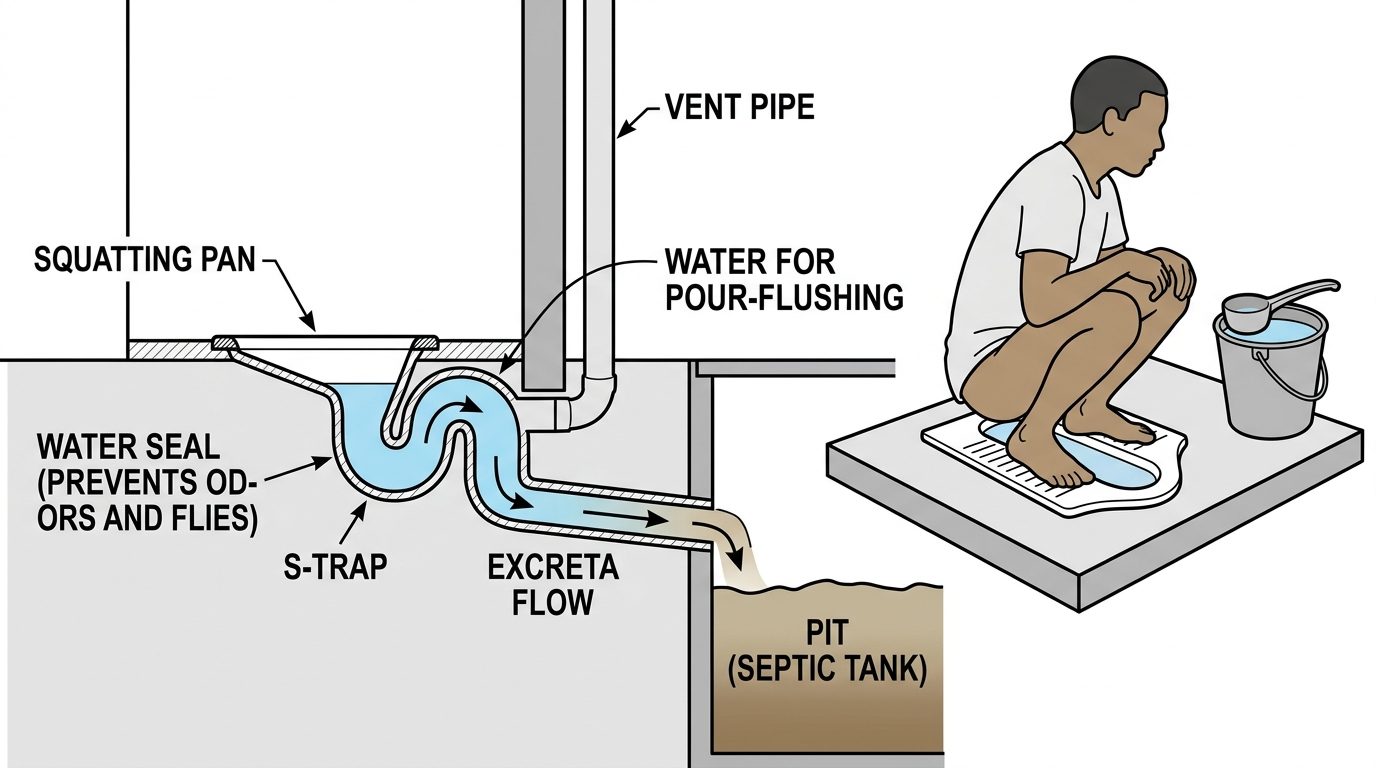
- Water is poured into the bowl to flush waste
- After flushing, a small amount of water remains to prevent bad odors
- Common in towns and villages
- Easy to use and flush
- Prevents bad smells from coming up
- Clean and hygienic
- Can be built inside the house
- Don't flush plastic, rubber, paper, or menstrual pads down the toilet
- Don't build the toilet near water sources
- Needs sufficient water for flushing
- Clean regularly with soap and water
- Use phenol or other toilet cleaners to disinfect
- Install a hand-washing station with soap near the toilet
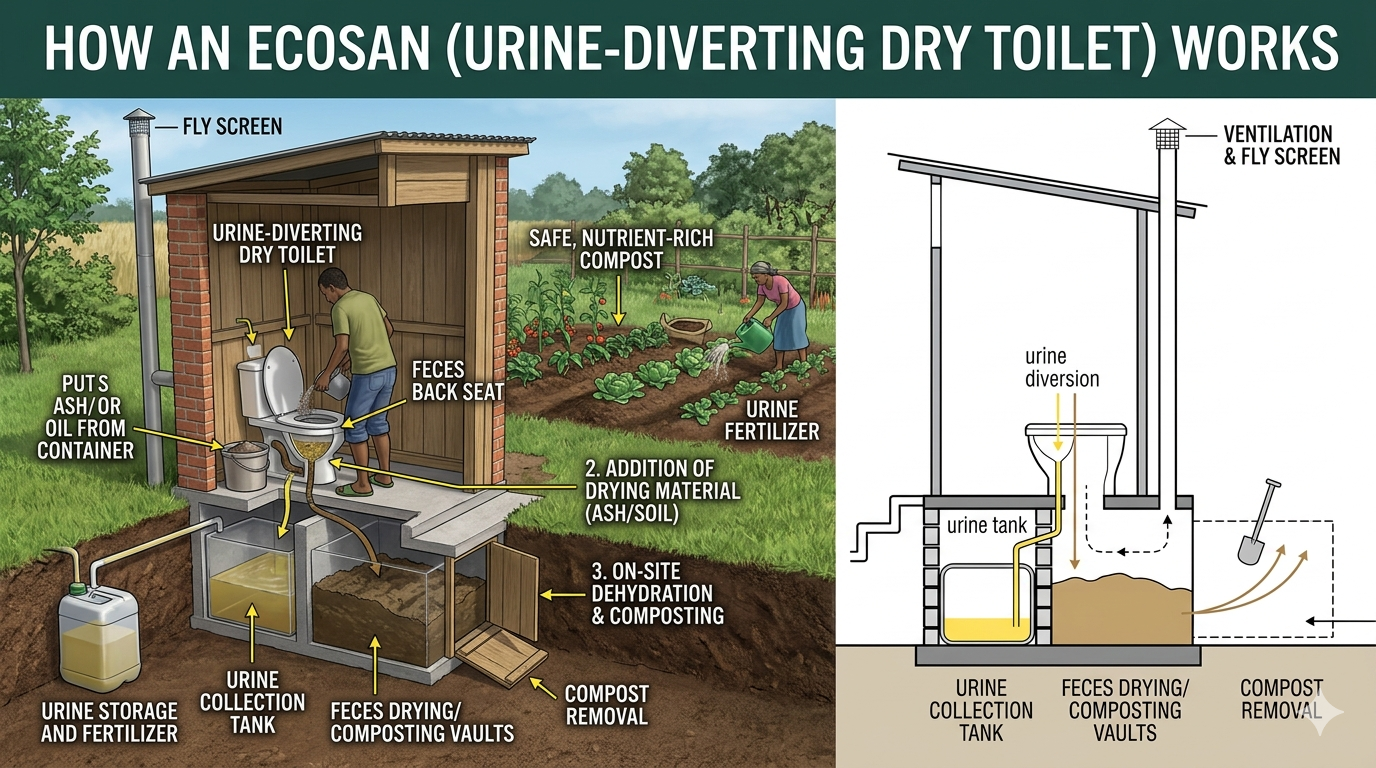
- Urine and feces go into separate safety tanks
- Feces take 5–6 months to become organic compost
- Urine takes 15–30 days to become organic fertilizer
- No water is needed for flushing
- The ecopan has three parts: shallow front for urine, drop hole in middle for feces, shallow rear for cleaning
- Environment Friendly: Uses human waste as a resource, not as waste
- Water Saving: No water needed for flushing — good for areas with water shortage
- Produces Fertilizer: The compost contains nitrogen, phosphorus, and potassium — important nutrients for crops
- Saves Money: No need to buy chemical fertilizers
- Sustainable: Good for farming and environmental protection
- Reduces Insects: Protects farms from pests and diseases
| Feature | Water-Seal Toilet | Ecosan Toilet |
|---|---|---|
| Water Needed? | Yes, requires water for flushing | No water needed |
| Best For | Areas with plenty of water | Areas with water shortage |
| Maintenance | Regular cleaning needed | Minimal maintenance |
| Compost Production | No | Yes, valuable fertilizer |
| Location | Not near water sources | Can be anywhere |
| Cost | Higher operating cost | Lower operating cost |
School Health Screening Test
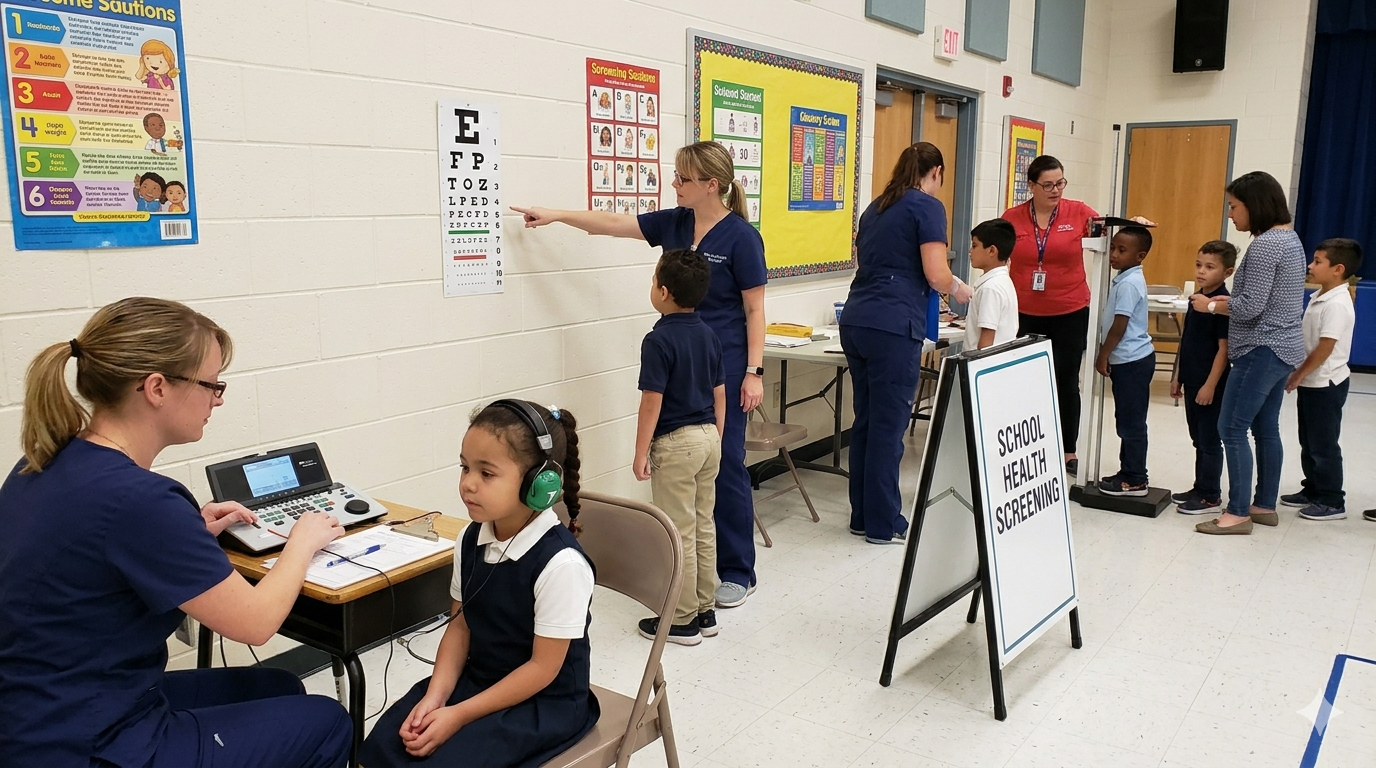
- Teachers
- Trained nurses
- Health professionals
- Students (with supervision)
- Height Measurement: Check how tall each student is
- Weight Measurement: Check body weight
- Vision Test: Check eyesight and if glasses are needed
- Dental Health: Check teeth and dental problems
- Hearing Test: Check if student can hear properly
- Other Physical Checks: General physical condition
- Identifies health problems that are not easily seen
- Checks student health at very low cost
- Makes students aware of their health condition
- Helps to treat problems early before they get worse
- Guides parents to take children to hospitals if needed
- Prevents future health problems by early detection
For Measuring Weight: Step onto a weighing machine, keep feet flat and even, and stand still to record the reading.
For Measuring Height: Stand with your back against a wall, ask a friend to place a straight object on your head, mark the wall at that point, then measure the distance from the floor to the mark with a measuring tape.
Mental Health
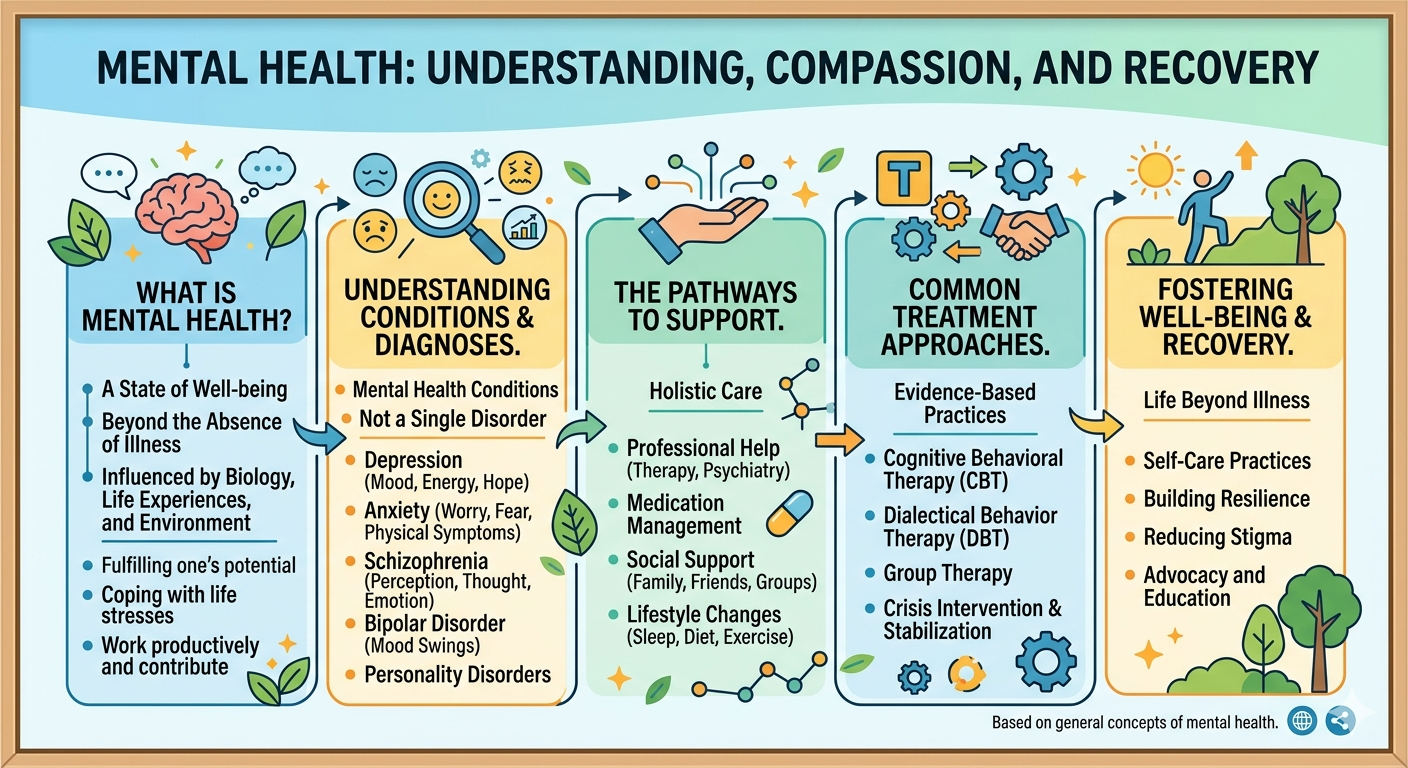
Mental health is as important as physical health. A mentally healthy person can manage daily life, handle stress, make good decisions, and maintain healthy relationships with others.
Stress, Anxiety, and Depression
These are three common mental health problems that many people face:
- Problems in relationships with family and friends
- Not achieving expected success
- Pressure from school or work
- Financial problems
- Health problems
- Social pressure
- Not achieving success in life
- Not earning recognition
- Financial problems
- Past mistakes and bad memories
- Fear of death
- Fear of failure
- Physical or mental abuse or exploitation
- Loneliness
- Family problems
- Drug addiction
- Loss of a loved one
- Losing status or achievement
- Unexpected betrayal by someone
Management of Mental Health Problems
There are many ways to manage stress, anxiety, and depression. Here are some practical methods:
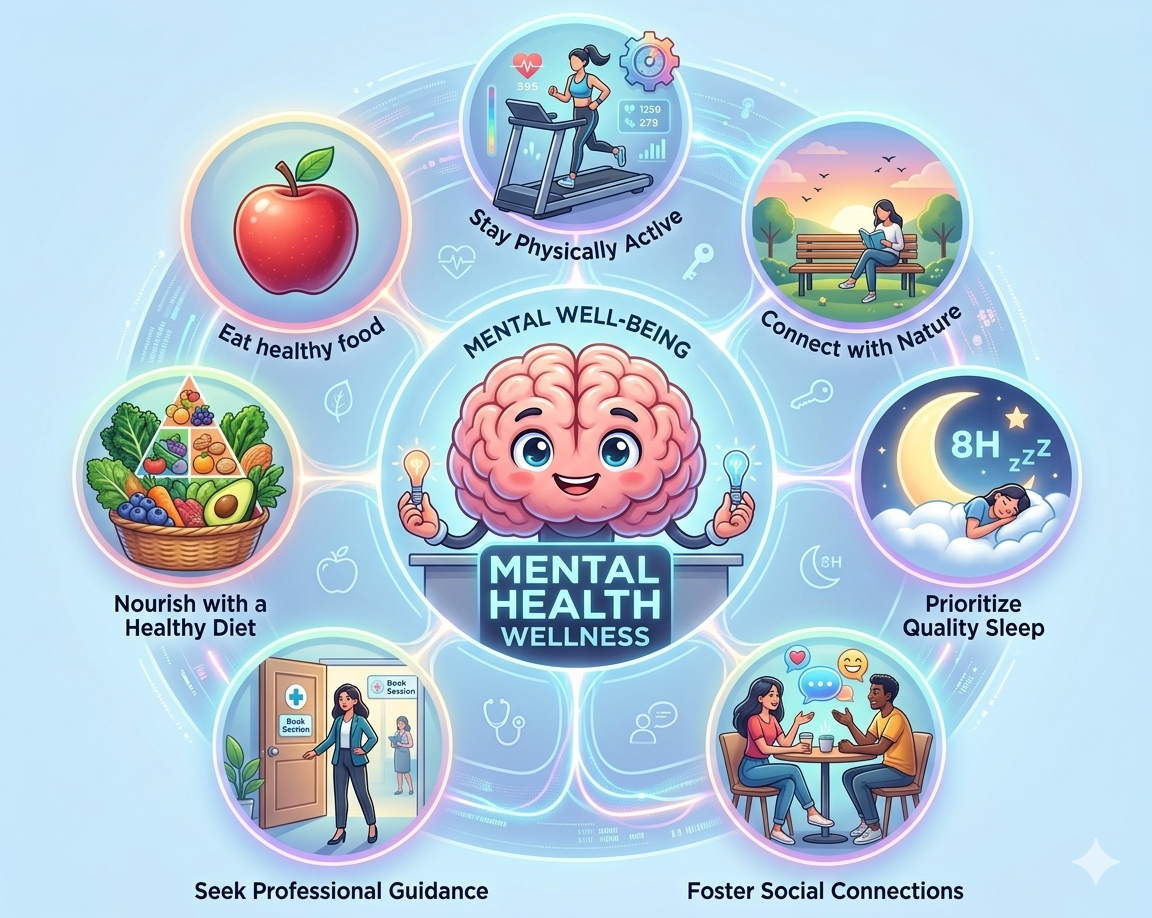
- Think Positively: Focus on good thoughts and believe you can solve problems
- Play Games and Sports: Physical activity helps reduce stress
- Read Books: Reading can calm the mind and provide knowledge
- Be Creative: Write stories, draw, paint, or do creative work
- Family Involvement: Spend time with family, help each other, participate in family activities
- Healthy Sleep: Get enough sleep (7–9 hours per night)
- Nutritious Food: Eat healthy and balanced meals
- Regular Exercise: Exercise 30 minutes daily
- Social Connection: Stay in touch with neighbours, relatives, and friends
- Schedule Your Day: Plan activities and stick to a routine
- Yoga and Meditation: Practice yoga and meditation regularly for peace of mind
- Use Social Media Wisely: Don't spend too much time on social media
- Seek Help: Talk to teachers, counselors, or psychiatrists if problems continue
- Deep Breathing: Take slow, deep breaths to calm yourself
- Talk to Someone: Share your problems with friends, family, or counselor
- Take a Walk: Go outside and take a walk in fresh air
- Listen to Music: Listen to your favorite music
- Hobbies: Do activities you enjoy
Conversion Disorder
- Fainting or loss of consciousness
- Body tremors or shaking
- Foaming at the mouth
- Over-excitement or abnormal excitement
- Involuntary movements
- Shouting or murmuring sounds
- Stressful and traumatic events
- Sexual assault or abuse
- Physical abuse or violence
- Disturbed relationships
- Inability to meet needs
- Emotional trauma
- Identify the Problem: Try to understand the real cause behind the symptoms
- Show Support: Help them feel safe and supported
- Encourage Sharing: Help them share their problems with family and friends
- Consult Experts: Take them to a doctor or psychiatrist
- Provide Counseling: Professional counseling helps them understand and manage problems
- Provide Comfort: Reduce stress and provide a calm environment
- Medical examination to rule out physical diseases
- Counseling with trained professionals
- Treatment by psychiatrist or psychologist
- Support from family and friends
- Stress management techniques
- Time and patience for recovery
Conversion disorder can get worse if not treated promptly. Early treatment and counseling can help people recover completely. It is important to treat the root cause (psychological problem), not just the physical symptoms.
Legal Provision on Drug Abuse

The World Health Organization (WHO) defines drugs as substances that are not essential to consume for our healthy body. Drugs affect the functions of the central nervous system and bring changes in the thoughts and feelings of a person.
- Different physical problems
- Emotional problems and mood changes
- Mental health problems and depression
- Social problems and broken relationships
- Criminal activities and violence
- Damage to family and community
- Death in severe cases
Nepal has a law called the Narcotic Drugs (Control) Act, 2033 (1976) that lists all narcotic drugs. This law defines what is prohibited and what punishments are given for drug-related crimes.
- Cultivating or growing drug plants
- Producing or manufacturing drugs
- Preparing drugs for use
- Purchasing drugs
- Selling or distributing drugs
- Exporting or importing drugs
- Trafficking drugs
- Storing drugs
- Consuming or using drugs
| Drug Type | Offense | Punishment |
|---|---|---|
| Cannabis | Consumption | Up to 1 month imprisonment OR fine up to Rs. 2,000 |
| Cannabis | Cultivation | Up to 3 years imprisonment OR fine up to Rs. 25,000 |
| Cannabis | Production, Distribution, Export/Import, Trafficking | Up to 10 years imprisonment AND fine up to Rs. 1,000,000 |
| Opium, Cocaine & Others | Consumption | Up to 1 year imprisonment AND fine up to Rs. 10,000 |
| Opium, Cocaine & Others | Cultivation | Up to 10 years imprisonment AND fine up to Rs. 200,000 |
- Education: Learn about the dangers of drugs in school and at home
- Awareness: Spread information about drug dangers to friends and family
- Avoid Bad Company: Stay away from people who use drugs
- Strong Family Support: Talk openly with family about drug problems
- Healthy Activities: Play sports, join clubs, and participate in community activities
- Seek Help Early: If someone is struggling with drug use, get help from doctors and counselors immediately
- Know the Law: Understand that drug use is illegal and punishable
- Respect Health: Protect your body and mind from harmful substances
- Community health involves the combined efforts of individuals, families, and the whole community
- Total sanitation is essential for a healthy community
- Both water-seal and ecosan toilets are important for different situations
- School health screening helps identify problems early
- Mental health is as important as physical health
- Stress, anxiety, and depression are treatable conditions
- Healthy lifestyle, support from others, and professional help can manage mental health problems
- Conversion disorder is a real condition that needs proper treatment
- Drugs are illegal and dangerous substances that harm the body and mind
- Nepal's Narcotic Drugs (Control) Act has strict punishments for drug-related activities
- Drug abuse can be prevented through education, awareness, and a healthy lifestyle
✓ True
These are all fundamental pillars that ensure overall well-being and disease prevention within a community.
✗ False
Ecosan toilets are specifically designed to separate urine and faeces into different compartments so they can be safely processed and used as agricultural fertilizer.
✓ True
These are standard baseline assessments used to monitor children's growth and detect any early physical impairments that might affect their learning.
✗ False
Conversion disorder is classified as a psychiatric condition where severe psychological stress or trauma unconsciously manifests as physical symptoms (such as paralysis or blindness) without any underlying neurological cause.
✓ True
According to Nepal's Narcotic Drugs (Control) Act, 2033, this is the legally prescribed penalty for the personal consumption of cannabis.
Three common health problems found in communities:
- Waterborne Diseases: Illnesses like typhoid and cholera occur frequently due to contaminated drinking water sources and poor sanitation infrastructure.
- Respiratory Infections: Conditions such as asthma and chronic bronchitis are worsened by indoor air pollution (burning solid fuels) and outdoor dust or vehicle emissions.
- Malnutrition: Particularly common in young children and pregnant women, stemming from lack of access to a balanced diet, leading to stunted growth and weakened immunity.
Maternal health programs ensure that women receive proper prenatal and postnatal care. For example, providing free check-ups and skilled birth attendants drastically reduces maternal and infant mortality rates.
Nutrition programs, such as providing mid-day meals in schools or iron supplements to adolescent girls, ensure that the population grows up physically and mentally strong, directly reducing the burden of disease.
Health insurance programs remove the financial barrier to accessing medical care. For instance, a low-income family with health insurance is more likely to seek early treatment for an infection rather than waiting until it becomes a life-threatening emergency, preventing poverty caused by medical bills.
Total sanitation refers to the complete eradication of open defecation and the comprehensive, safe management of all human excreta, liquid waste, and solid waste to create a clean and disease-free environment.
Its main components include:
- Achieving and sustaining Open Defecation Free (ODF) status
- Practicing personal hygiene, especially hand-washing with soap at critical times
- Ensuring safe handling and storage of drinking water
- Proper disposal and management of solid waste (garbage)
- Proper drainage and management of liquid waste (wastewater)
Ecosan Toilet: An ecological sanitation system designed to separate urine and faeces. It operates without flushing water. Waste is collected, dried, and decomposed to be reused as nutrient-rich fertilizer, thus treating human waste as a resource.
Sulabh Toilet: A pour-flush pit latrine system that requires a small amount of water to flush waste through a water seal (which prevents odors). Waste goes into one of two underground pits; when the first fills, waste is diverted to the second, allowing the first pit's contents to decompose into safe compost over time.
Causes of mental health problems: They are typically a combination of biological factors (genetics, brain chemistry imbalances, or brain injuries), psychological factors (severe childhood trauma, emotional abuse, or chronic stress), and environmental factors (extreme poverty, social isolation, or substance abuse).
Constructive measures of stress management:
- Engaging in regular physical exercise, which naturally releases mood-boosting endorphins
- Practicing relaxation techniques like deep breathing, meditation, or yoga
- Maintaining a healthy lifestyle with a balanced diet and adequate sleep (7–9 hours)
- Building a strong support system by talking openly with trusted friends or family
- Seeking professional help from a therapist or counselor when stress becomes overwhelming
a. School health screening test: A proactive public health measure in educational institutions where students are assessed for basic health indicators like height, weight, vision, and hearing. The goal is early identification of physical or developmental issues so that timely interventions can support the child's learning and well-being.
b. Depression: A prevalent and serious mental health disorder characterised by persistent, deep feelings of sadness, hopelessness, and a marked loss of interest in previously enjoyed activities. It affects how a person feels, thinks, and handles daily activities like sleeping, eating, or working, and often requires professional treatment.
c. Conversion disorder: A psychological condition where a person experiences neurological symptoms — such as blindness, paralysis, or inability to speak — that cannot be explained by any medical evaluation. These physical symptoms are believed to be an unconscious physical manifestation of intense psychological stress, trauma, or emotional conflict.
d. Water-seal toilet: A sanitary fixture featuring a U-shaped pipe (trap) beneath the toilet bowl. After flushing, a small pool of water remains trapped in this curve, creating an airtight "seal" that prevents foul-smelling sewer gases and disease-carrying insects from travelling back up the pipe into the bathroom.
The Narcotic Drugs (Control) Act, 2033 establishes strict legal frameworks to combat drug abuse and trafficking. Its primary provisions prohibit the cultivation, production, preparation, manufacture, export, import, purchase, sale, and consumption of narcotic drugs without authorised permission.
The Act categorises different drugs and outlines specific, scaled punishments — ranging from fines to lengthy prison sentences — based on the type of narcotic involved, the quantity seized, and whether the offence is for personal consumption or commercial trafficking.
Solving the increasing problem of drug abuse requires a comprehensive, multi-layered approach:
- Education and Awareness: Schools and communities must provide honest, factual education about the dangers of drug abuse — for example, organising interactive workshops or street dramas that illustrate the real-life consequences of addiction.
- Strong Family and Social Support: A supportive home environment reduces the psychological stress that often leads to substance abuse. Parents should maintain open, non-judgmental communication with their children.
- Engagement in Positive Activities: Communities should invest in youth clubs, sports facilities, and vocational training centers to keep young people constructively engaged.
- Rehabilitation over Criminalization: While strict laws are necessary for traffickers, users should be treated as patients needing medical and psychological help. Establishing affordable rehabilitation centers that offer counseling, detoxification, and job training is crucial for recovery.
Course material curated by Mr. Nripendraswar Acharya