Physical Exercise and Drill
Digital Handwritten Lesson
Physical Exercise
& Drill
Health, Physical & Creative Arts | New Millennium Academy
2083 B.S. | Pokhara
Introduction to Physical Exercise and Drill
Physical training means doing physical activities to keep the parts of our body strong and fit. (शारीरिक तालिम = physical training)
A drill is a group activity where everyone does the same movements at the same time by following commands given by a leader. Drills help us learn physical balance (शारीरिक सन्तुलन) and discipline (अनुशासन).
💪 Physical Exercise
Builds strength, flexibility and fitness of individual body parts. You can do it alone or in a group.
🎖️ Drill
Builds teamwork (सहकार्य), rhythm and discipline. Always done in a group following commands together.
6.1 Physical Exercise
Before starting any exercise, we must consider our age, fitness level, timing, type of exercise, nutrition (पोषण) and proper training. Regular practice builds strength and fitness, helping the body perform better in all activities.
🧘 Neck Exercise
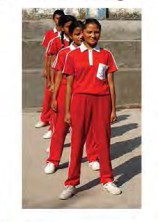
🧍 Starting position — hands on armpits, body straight and relaxed.
| Count | Action | Nepali Hint |
|---|---|---|
| 1 | Turn head to the left — look toward your left shoulder | बायाँ फर्कनुहोस् |
| 2 | Return head to straight/centre | सिधा आउनुहोस् |
| 3 | Turn head to the right — look toward your right shoulder | दायाँ फर्कनुहोस् |
| 4 | Return to straight | सिधा आउनुहोस् |
| 5 | Drop chin to chest — look downward | ठुडो छातीमा लगाउनुहोस् |
| 6 | Return to straight | सिधा आउनुहोस् |
| 7 | Look up — tilt head backward to stretch the back of the neck | माथि हेर्नुहोस् |
| 8 | Return to straight | सिधा आउनुहोस् |
🔁 Counts 9–16 repeat the same sequence.
See the stages below:
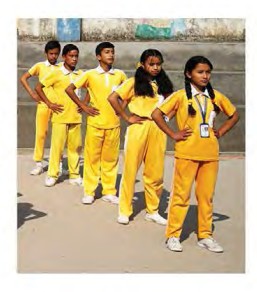
📌 Overview diagram of all four stages of the neck exercise.
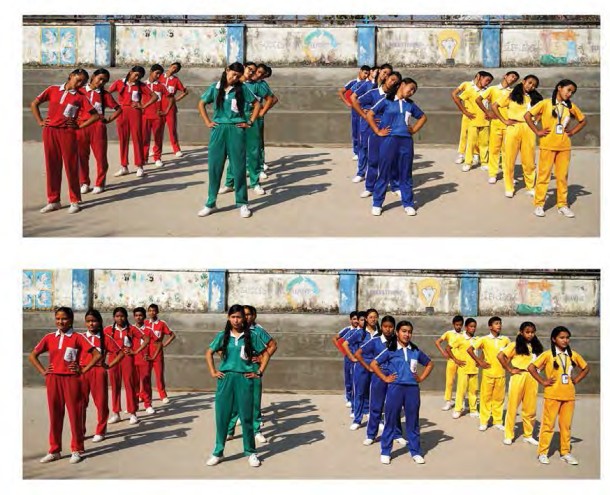
➡️ Left turn (Count 1) and Right turn (Count 3) — keep shoulders still, only the head rotates.
Head Left — turn slowly toward your left shoulder. Hold for one beat.
Head Right — turn slowly toward your right shoulder. Keep posture firm.
Chin to Chest — lower the chin gently. Stretches the back of the neck.
Look Up — tilt head backward. Stretches the front of the neck.
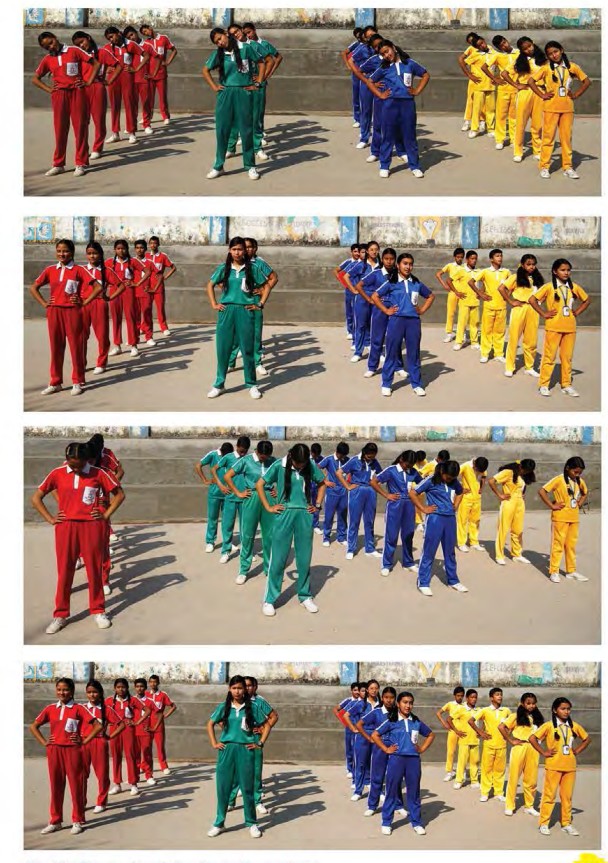
⬇️ Count 5: Chin to chest — ⬆️ Count 7: Look up to stretch the back of the neck.
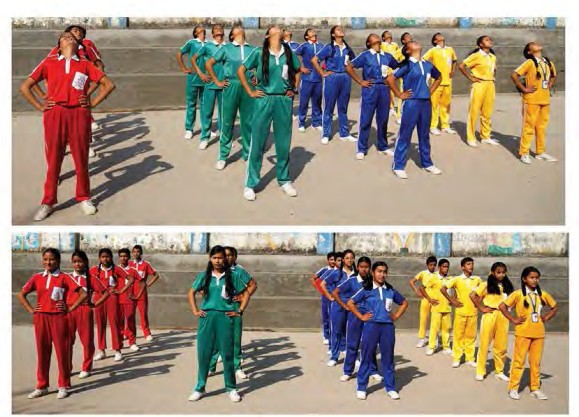
🏁 Returning to straight position after each count — always come back to centre before the next movement.
🧘 Neck Exercise (Part 2)
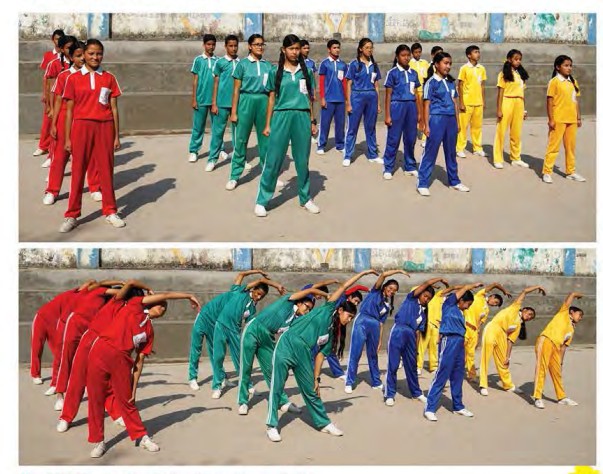
📌 Activity 6.2 — full sequence of neck movements. Follow each count carefully with controlled speed.
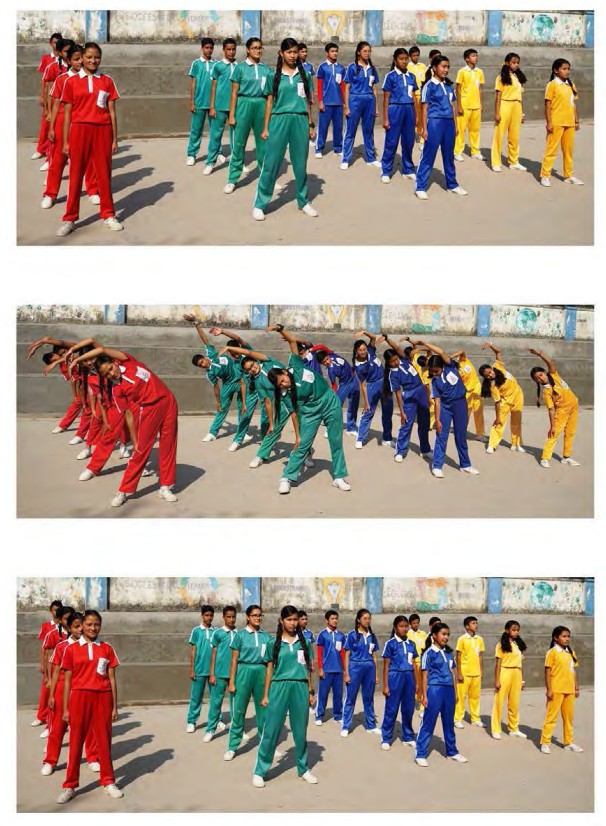
🔍 Detailed positions for Activity 6.2. Notice how the body stays still — only the neck and head move.
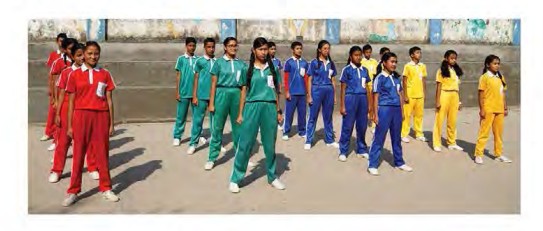
🏁 Final and return positions for Activity 6.2. Always end by returning to the upright starting posture.
💪 Chest, Trunk, Abdomen & Hand Exercise
| Count | Action | Nepali Hint |
|---|---|---|
| 1–3 | Bend forward — lean the trunk toward the ground and try to touch the floor with your fingers | अगाडि झुक्नुहोस् — औंलाले जमिन छुनुहोस् |
| 4 | Return to straight/starting position | सिधा उभिनुहोस् |
| 5–7 | Bend backward — lean the trunk backward to stretch the chest and abdomen | पछाडि झुक्नुहोस् — छाती र पेट तानिनुहोस् |
| 8 | Return to straight/starting position | सिधा उभिनुहोस् |
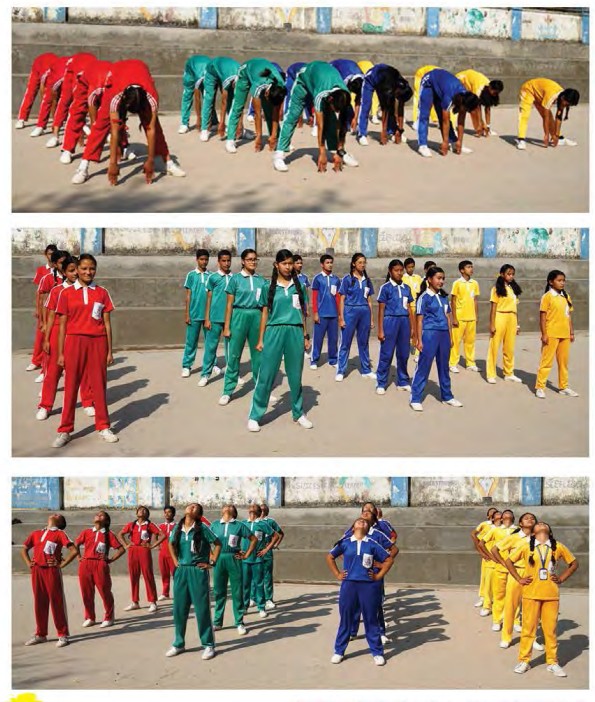
⬇️ Forward bend (Counts 1–3): Try to touch the ground with your fingers. Keep knees straight. ⬆️ Backward bend (Counts 5–7): Stretch the chest and abdomen fully.
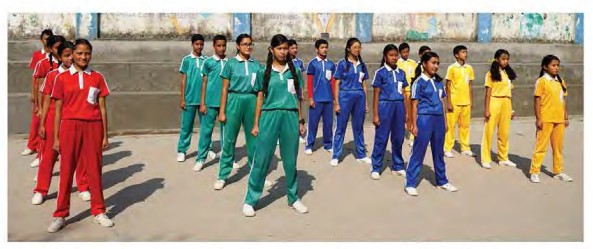
🏁 Returning to the starting position at Count 4 and Count 8. Always stand straight before beginning the next count.
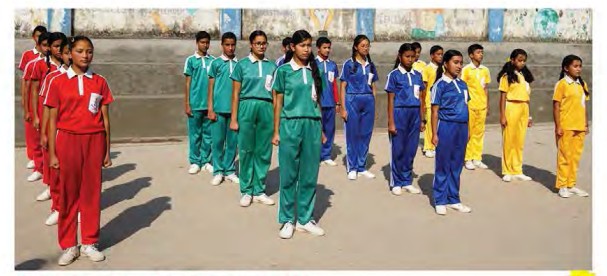
📌 Complete position guide for Activity 6.3 — forward bend, return, backward bend, return.
Forward Bend — fingers toward the ground. Feel the stretch in your back and hamstrings.
Straight — return to starting position. Breathe in as you rise.
Backward Bend — chest opens up, abdomen stretches. Move slowly and carefully.
Straight — return to starting position. Ready for the next round.
🏋️ Hands, Arms & Shoulders Exercise
| Count | Action | Nepali Hint |
|---|---|---|
| 1 | Step left leg forward, raise arms straight to the front (shoulder level) | बायाँ खुट्टा अगाडि — हात सामुने उठाउनुहोस् |
| 2 | Raise arms straight up above the head | हात माथि उठाउनुहोस् |
| 3 | Spread arms sideways (like a T-shape), palms facing down | हात दुवैतिर फैलाउनुहोस् |
| 4 | Return to starting position | सुरुको ठाउँमा फर्कनुहोस् |
| 5–8 | Repeat the same sequence (Counts 1–4) with right leg forward | दायाँ खुट्टा अगाडि राखेर दोहोर्याउनुहोस् |
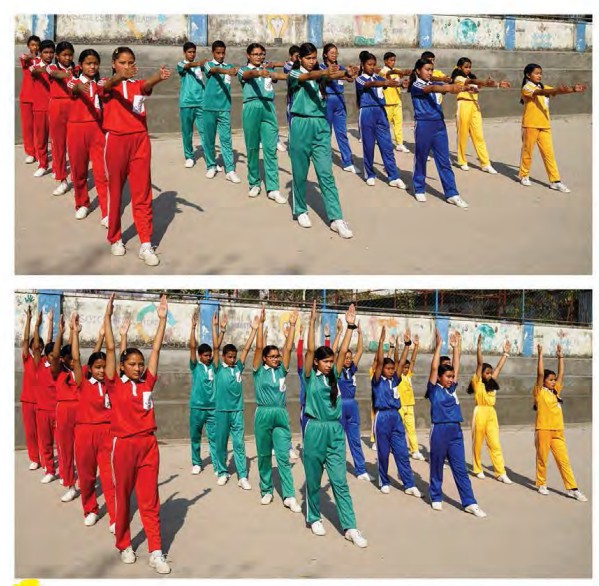
➡️ Stage A (Count 1): Arms front at shoulder level. ⬆️ Stage B (Count 2): Arms raised above the head. ↔️ Stage C (Count 3): Arms spread sideways like a T-shape, palms down.
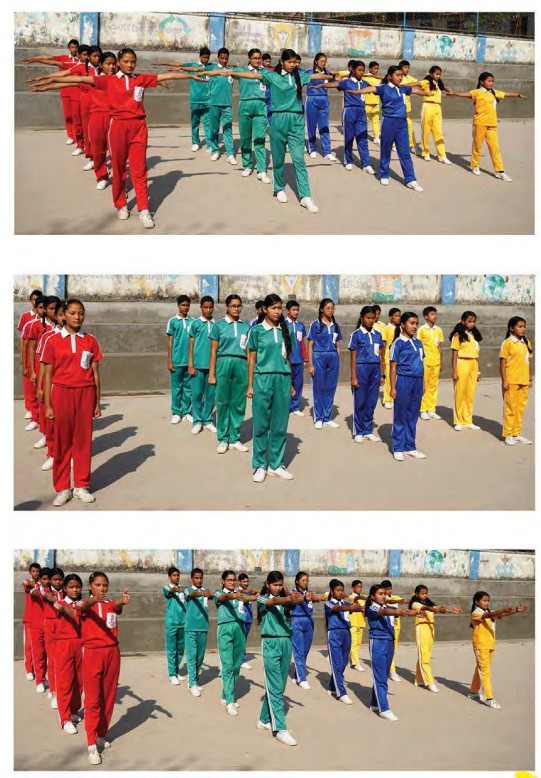
🔁 Counts 5–8: Repeat the exact same arm movements with the right leg stepping forward. Return to starting position at Count 8.
Arms Front — raise straight forward to shoulder level. Left leg steps forward.
Arms Up — raise above the head, fully stretched upward.
Arms Sideways — spread to a T-shape, palms facing down toward the ground.
Return — bring feet together and lower arms to starting position.
6.2 Drill
What is a Drill?
A drill is a group activity with command (आदेश), action (कार्य) and rhythm (लय). The team leader uses counting, drums or whistle to keep everyone moving together. All members move at exactly the same time.
📋 How to Practice Drills
- Form rows and columns so everyone can see the leader clearly.
- Place the leader in the centre so instructions are visible to all.
- Count from right to left during each move.
- Always stay in attention posture (सावधान मुद्रा) before each command.
- Practice slowly first, then gradually increase speed.
🎖️ Drill Commands & Activities
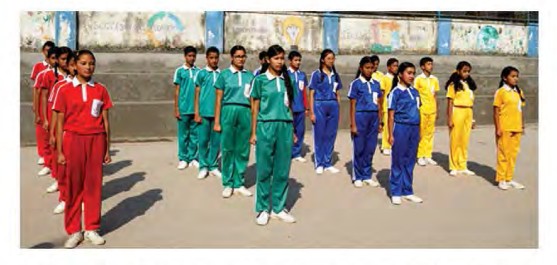
🧍 Attention: Heels together, chest out, arms at sides, hands in loose fists. Body fully alert. | 🚶 Stand at Ease: Feet apart, hands clasped behind the back. Relaxed but ready.
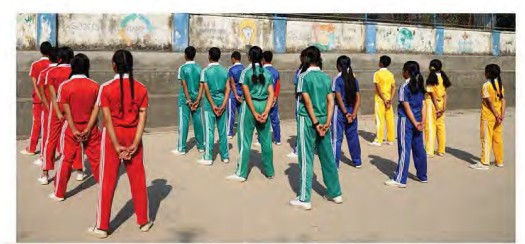
⏩ Right Turn: Pivot on the right heel, turning 90° to the right. ⏪ Left Turn: Pivot on the left heel, turning 90° to the left. Keep back straight during the turn.
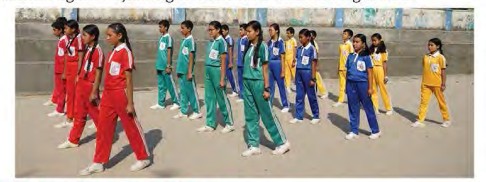
🎵 Mark Time: Lift legs alternately in place, keeping rhythm with the drum or whistle. You are marching without moving forward — stay in one spot.
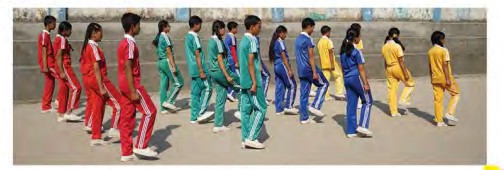
🔄 About Turn: Turn 180° (completely around) in a controlled manner. You will now face the opposite direction.
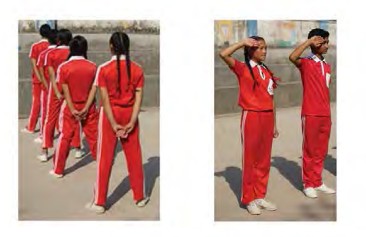
👋 Disperse: Step forward, greet and take a short break — you will return. | 🎖️ Dismiss: Give a salute and the drill session officially ends.
📢 All Drill Commands
Exercise Questions & Answers
| No. | Physical Exercise | Drill |
|---|---|---|
| 1. | It focuses on strengthening specific body muscles (मांसपेशी). | It focuses on synchronization (एकसाथ गर्ने) and discipline (अनुशासन). |
| 2. | It can be done individually (एक्लै) or in a group. | It always requires a group moving together by following commands. |
Way 1: Step the left leg forward and raise arms to the front, then up, then sideways (Counts 1–4).
Way 2: Step the right leg forward and repeat the exact same arm movements — front, up, sideways, and return (Counts 5–8).
💡 Both ways use the same arm pattern, but the stepping leg changes — first left leg, then right leg.
1. It strengthens the trunk (धड़) and abdomen (पेट) muscles, making forward and backward bending easier.
2. It protects the spine (मेरुदण्ड) and improves our body posture (शारीरिक मुद्रा), reducing back pain and injury.
Way 1 — Forward Bend: From the starting position, lean the trunk forward and try to touch the ground with your fingers (Counts 1–3), then return straight (Count 4).
Way 2 — Backward Bend: From the straight position, lean the trunk backward with hands on the waist to stretch the abdomen and chest (Counts 5–7), then return straight (Count 8).
Why? Because in these sports, we constantly use our hands and arms to throw, hit, catch and serve the ball. Strong arms help us perform these actions with more power and accuracy, so these sports are a great way to exercise the arms and shoulders naturally while having fun.
| No. | Disperse (विसर्जन) | Dismiss (बिदाइ) |
|---|---|---|
| 1. | It is a short break — students step forward, greet, and take rest for a while before returning. | It officially ends the drill session — students give a salute and the practice is finished for the day. |
| 2. | After dispersing, students are expected to come back and continue. | After dismissal, there is no return — the session is completely over. |
- Our muscles (मांसपेशी), heart (मुटु) and lungs (फोक्सो) become stronger.
- The risk of diseases (बिमारी) like diabetes and heart problems is reduced.
- Our mood improves (मनस्थिति सुध्रिन्छ) and we feel less stressed.
- We sleep better (राम्रो निद्रा) and have more energy (शक्ति) throughout the day.
So regular exercise does not just make us physically fit — it also keeps our mind healthy and happy.
- They improve physical fitness (शारीरिक स्वास्थ्य) — making the body strong and active.
- They build discipline (अनुशासन) and teach us to follow rules properly.
- They develop teamwork (सहकार्य) and leadership (नेतृत्व) skills.
- They improve concentration (एकाग्रता) and keep the mind sharp and focused.
- They support mental health (मानसिक स्वास्थ्य) and help build good character (चरित्र निर्माण).
That is why drills and PT are made a part of school education — they make students healthy, disciplined and good team players.
Final Summary
PT Activities 6.1 & 6.2
Neck exercises in multiple directions — builds flexibility and prevents neck stiffness.
PT Activity 6.3
Trunk, chest & abdomen — forward and backward bending strengthens the core and spine.
PT Activity 6.4
Hands, arms & shoulders — three-stage arm movement improves upper body strength.
Drill
12 commands — builds discipline, unity, rhythm and collective teamwork in students.
💪 Practice regularly for a strong body, sharp mind and team spirit!
नियमित अभ्यास गर्नुहोस् — स्वस्थ रहनुहोस्, खुसी रहनुहोस्!
Course material curated by Mr. Nripendraswar Acharya